Within our opening sequence we also have added titles to make it look like a real opening to a film and also have added a soundtrack instead of dialogue.
Wednesday, 1 May 2013
Tracker - Opening Sequence
Dear Moderator, below is our opening sequence "Tracker." Our opening sequence consists of the female protagonist chasing the male antagonist. We have chosen to change the stereotype of the protagonist and antagonist as it shows to our target audience how a male role can be played by a female as well.
Within our opening sequence we also have added titles to make it look like a real opening to a film and also have added a soundtrack instead of dialogue.
Within our opening sequence we also have added titles to make it look like a real opening to a film and also have added a soundtrack instead of dialogue.

Friday, 26 April 2013
Evaluation
Below is my media product "Tracker" evaluation, I have answered seven questions which all relate to my media product.
In what way does your media product use, develop or challenge forms and conventions of real media products?
How does your media product represent particular social groups?
Who would be the audience for your media product?
How did you attract or address your audience?
What kind of media institution might distribute your media product and why?
What have you learnt about new media technologies during the construction of your media product?

Looking back at my preliminary task, I definitely think the camera work and the shots used have become more advanced which shows that over time we have developed our understanding of film production. I have also learnt how to produce a media product using different technologies such as Serif MoviePlus and using a HD camera, we allowed my group and I to produce our final opening sequence. With the editing technoly, it shows with in our product as well, our audience will see our female protagonist putting on lipstick then cuts to titles, this then carries on and the audience can see the male antagonist shaving. Overall, I think our understanding has increased and we now know how to professionally produce a film in comparison to our preliminary task.
Tuesday, 26 March 2013
XL Recordings
The next record label I have to compare to Sony ME is an independent record label of my choice. I chose XL recordings.

Below is a list of artists and bands signed to XL recordings:

XL recordings are an independent record labe based in London founded by Richard Russel. It was previously an offshoot of Beggars Banquet records, and the label was lauched in order to release rave and dance music.
Below is a list of artists and bands signed to XL recordings:
- Adele
- Dizzee Rascal
- Giggs
- M.I.A
- SBTRKT
- Radiohead
- Basement Jaxx
- Tyle, The creator
Sony Music Entertainment
For my exam I have to compare two music record labels. The first one we have to research is Sony Music Entertainment.

Sony Music Entertainment is an American and global music record label controlled and owned by Sony Coperation. Sony ME are a parent company which own other smaller independent record labels such as RCA, LCA, Jive etc, this is known as horizontal intergration. This allows the audience to choose from a variety of different artists to listen too and also allow them to by different albums and singles from other artists.
Below is a list of artists in which Sony ME have signed:
- Alicia Keys
- Beyonce
- Calvin Harris
- JLS
- Justin Timberlake
- Rita Ora
- The Script
- Usher
All of the artists which are signed to Sony ME are all well-known by most people as they all sell music singles and albums.
Production Meeting 8
In this production meeting we put all of our shots together and then we edited them.
All the shots we have filmed, have all been put together using serif, a programme which allows us to edit our opening sequence. This allowed us to see which shots we needed to edit before finalising our opening sequence, and also where the titles should go in our opening sequence.
All the shots we have filmed, have all been put together using serif, a programme which allows us to edit our opening sequence. This allowed us to see which shots we needed to edit before finalising our opening sequence, and also where the titles should go in our opening sequence.
Monday, 11 March 2013
Music Industry
Production - refers to the recording of music in a studio, music formatting, designing and producing artwork. For example, the production team for Rihanna's album Loud.

Distribution - this is the process of getting the music aired and ready for downloading. For exapmle, getting the music ready for dowloading in which becomes available in the iTunes store.
Marketing - this is promoting the music. For example, the television advert for 18 Months by Calvin Harris.
Exchange - is obtaining the music created.
Consumption - what the audience does with the music e.g sampling, editing or even producing something new.
Synergy - this is when a record label works with another media company to promote two products simultaneously. For example, Adele recording Skyfall for Eon Production in order to premiere the movie Skyfall.
Convergence - there are two types of convergence, the first one is an economic strategy in which communication companies seek financial benefit by making the various media's their own by having the same product distributed across these different media.
They second convergence is technical convergence. This is the trend of technologies to merge into new technologies that bring together a number of different media.
Thursday, 28 February 2013
Useful research websites
In our lesson today we research useful movie websites. We did this in order to see which websites we could use to watch film clips on, so that we can analyse each clip. The first website we looked at was Movieclips. There is a link below to show you:

The second movie website we looked at was Art of the Title. This website is similar to movieclips, it allows viewers to research their favourite clips or clips that interested in. Click on the link below to go the website.

Another useful website is youtube. On youtube, it allows you to research any media related subject, this could be from music to full movies to movie clips. www.youtube.com

Wednesday, 27 February 2013
Clips of Opening Sequence
This blog will show what filming we as a group have filmed already. On my previous blog I have shown the timeline of where each clip will be shown in our finished opening sequence. Our first clip we filmed was of our antagonist putting on lipstick. This is the third clip in our opening sequence.
Our next clip we filmed was of the antagonist waking up suddenly, this gives the audience a sense of wanting to see what happens next. The clip will be one of the first clips shown in our sequence as it is them waking up.
Production Meeting 7
In our lesson we decided that we should do a timeline of shots to see the order of shots we should use, below is our timeline.

Our timeline shows the titles; when and where they will be placed within our opening sequence, and also it shows each individual clip. This allows us to show a clear narritive to our audience and how fast/slow each clip and titles will appear.

Our timeline shows the titles; when and where they will be placed within our opening sequence, and also it shows each individual clip. This allows us to show a clear narritive to our audience and how fast/slow each clip and titles will appear.
Friday, 1 February 2013
Production Meeting 6
We had a production meeting yesterday and decided that we are going to change our opening sequence. We decided that we are going to have a male protagonist and a female antagonist, this allows us to play with the audiences mind in order for them to try and work out who is the antagonist and protagonist. Our opening sequence will now consist of a fight between the male and female character, who have had an arguement.
Monday, 14 January 2013
Production Meeting 5
In our next meeting we discussed our action points form our last meeting and decided to produce a final copy of the shot list of each scene. Below is a copy of our shot list:
We then spoke about our locations for the other scenes, we came to the conclusion that for the first scene we would need a bedroom, and for the final scene we would need the bedroom. We preferably needed a boys/mans bedroom to film in so we asked around and found one. We discussed an appropriate date to use the bedroom and compared all of our timtables.
Action points for next meeting:
- Discuss what dates are appropriate to film Oxford scene
- Plan what dates to edit our film
Production Meeting 4
In our first lesson back, we confirmed our ideas as a group and drew out a rough table for our scenes and shotlist. We then came together and sorted out our location. For this we had to contact Oxford City Counsil via phone in order to ask them if we could use westgate car park as our location for our opening scene. We were then given an email address for the manager of the car parks in Oxford. However, we haven't recieved an email back confirming that we can use the car park. If we cannot use the car park we have a back up location, the streets of Oxford. This can be done because we do not need OCC permission and also other groups in the past have used it.
We then came up with our action points for our next meeting:
We then came up with our action points for our next meeting:
- Finish our shot list
- Discover locations for the other scenes
Thursday, 20 December 2012
Production Meeting 3
Media - production pitch
This is our production pitch, showing our opening sequence ideas and how we are going approach filming it. We presented this to the class and got some really good feedback back. We got postive and focus points of feedback; our postitive points are that we have a really clear idea on what we are going to base our opening sequence on and that it seems as if we know what we are talking about and how we go about filming it. However, our focus points are that we need to focus on where we are filming our sequence, who our cast is going to be and what props we are going to use. We also need to focus on getting the message across to our target audience in order for them to understand what would happen in the film.
We then discussed our action points for our next meeting, these were:
- To discover a suitable location
- Put together a shot list
- Produce a final copy of a storyboard
Monday, 17 December 2012
Production Meeting 2
In our next meeting on the 13th December, we spoke about our action points, so where we could film our opening sequence, heard the soundtrack and the sound effects we could used and looked at the storyboard in which Bryony created.
We then, spoke about our ideas and decided as a group to produce an opening sequence on our first idea; the action sequence. This idea is where a person is asleep and is dreaming, as the action starts we will have a black screen with titles on it and then go back to the action. The sequence will end with the character waking up by the sound of a gun-shot and their alarm going off. By doing this we don't reveal the whole film throught the opening sequenece, it builds tension for the audience watching, making them want to carry on watching.
After this, we looked at various soundtracks and sound effect I had chosen. We narrowed them down to one soundtrack and two sound effects. Click on the links below to hear them.
Soundtrack
Sound effect - Alarm clock
Sound effect - Gun shot
We spoke about our action points. By our next meeting we wanted to have:
- A mood board created
- A powerpoint finished in order to make a production pitching
- Discussed cast and locations
Production Meeting 1
Our first meeting as a group (myself, Dionne and Bryony W) was held on the 6th December. We put some ideas together and we came up with 3 opening sequences we could do. These are:
 An action sequence: where a person is asleep and is dreaming, this is when the action comes in, as the action starts we will have a black screen with titles on it and then go back to the action. The sequence will end with the character waking up by the sound of a gun-shot and their alarm going off.

 Psychological sequence: We thought we could do an psychological horror/thriller and link the
 An action sequence: where a person is asleep and is dreaming, this is when the action comes in, as the action starts we will have a black screen with titles on it and then go back to the action. The sequence will end with the character waking up by the sound of a gun-shot and their alarm going off.
Miracle drug: we came up with this idea because we were speaking about the film "Limitless"; we thought we could reinact the opening sequence but thought we would give to much of the film away if we did.
 Psychological sequence: We thought we could do an psychological horror/thriller and link the
protagonist to the drama which unfolds within the film. However, we thought that this idea may be too common within our class and that it may have been too common in the past as well.
As a group we had to come up with action points. These allow each of us to go away and focus on one aspect of the opening sequence then bring back our ideas to the group and discuss in our next meeting together.
- My action point was to find a location in which we could film our opening sequence
- The sound we left to Dionne e.g. soundtrack, non diagetic and diagetic sounds
- The storyboard/screen shots Bryony had to focus on e.g. how we would film our opening sequence.
Thursday, 6 December 2012
How to make a video?
In our lesson today, we watched a DVD how to make our own video for when we film our opening sequence. From this I wrote notes on what we need to include and what we need to take into consideration before and after filming our sequence.
Pre-production
We need to work out the roles of each person. In the making of films a lot of people are involved including:
We also need to make a shot list. This is made up of the following things:
We also need to take into consideration of the purpose of our opening sequence, our target audience and our limitations of what we can and can't do. Here are a list of points we need to remember when filming our opening sequence.
Pre-production
We need to work out the roles of each person. In the making of films a lot of people are involved including:
- Executive Producer
- Director
- Writer
- Production manager
- Camera Operator
- Lighting Director
- Sound Technician
- Actors
- Editor
We also need to make a shot list. This is made up of the following things:
- Where we should shoot our sequence
- The time needed to shoot it
- The different camera angles
- The date we need to film by
We also need to take into consideration of the purpose of our opening sequence, our target audience and our limitations of what we can and can't do. Here are a list of points we need to remember when filming our opening sequence.
- Shooting of the project
- Time Management
- Quality control (image, sound, performance)
- Potential conflict between limitations
Sunday, 2 December 2012
Clip analysis
In our lesson on Thursday, Mr. Buckmaster gave us a list of things to include in our opening sequence. There are five main areas which we have to take into consideration when filming our opening sequence, these are: Genre, Setting, Atmosphere, Character and Narrative (enigma). We then had to analyse 3 different opening sequences and write our take on them, we were split into groups and were given a different area each, for example Narrative.
The first we analysed was Martin Scorsese's "Cape Fear", our group was given Narrative. My first impression was that it was a tragic story and it had an element of threat in it, I thought this was established through the camera shots used throughout the opening sequence because they are all close-up shot, causing the audience to get closer to what's happening and give them a sense of fear. I also that it was established through the dialogue at the end of the sequence, the character sounds so solemn and she has no emotion in her voice, this makes the audience want to know more and know what happened at Cape Fear.

The first we analysed was Martin Scorsese's "Cape Fear", our group was given Narrative. My first impression was that it was a tragic story and it had an element of threat in it, I thought this was established through the camera shots used throughout the opening sequence because they are all close-up shot, causing the audience to get closer to what's happening and give them a sense of fear. I also that it was established through the dialogue at the end of the sequence, the character sounds so solemn and she has no emotion in her voice, this makes the audience want to know more and know what happened at Cape Fear.
The next clip we analysed was "Hellboy 2" directed by Guillermo del Toro, for this clip we were given Setting to analyse. When we watched it, we firstly analysed the different places it was filmed in, we saw it started off in the bedroom and then quickly changed to what looked like a metal workshop. We came to the conclusion, that the metal workshop represented Hell. I think this is good because it gets the audience thinking before the film has even started. The opening sequence is inter-dimensional, showing the audience that the place where it is set, is more advanced than the world we live in. We also came up with the conclusion that the film is set in the past, we know this due to the Di Vinchi elements placed in the clip, this means the film has a historical element or connection to it. Click the link below to watch the titles.

The final film we analysed was the 1994 classic, directed by Robert Zemeckis "Forrest Gump", for this clip we were given Atmosphere. For this we looked at the weather, it seems as if its cold and there's hardly any wind, this gives the audience a sense that this film is going to be relaxing and a film where everyone leads a normal life. The music makes the opening sequence seem realistic making the audience think that something will happen to the character we are introduced too, in this case the protagonist Forrest Gump.
Wednesday, 21 November 2012
Preliminary Task
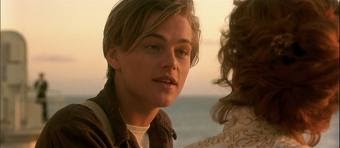
For our preliminary task we had to storyboard what we wanted to have as our preliminary, this is to get a rough idea of what we are going to film and how we would film it. The storyboard shows each shot and the camera angles in it. We then had to take into consideration the 180 degree rule; a rule which the director has to ensure the camera he uses during a conversation do not cross the invisible line between the actors, it allows the audience to be connected with the actors during the scene, Match on Action; this is where the angle of the camera changes during a scene, this comes across to the audience as if it hasn't happened and the seems flows normally, Reverse Angle Shot; this is shot behind each characters in the scene, it allows the audience to see things from the same perpective as the characters. Below is examples of the rules we had to take into consideration:
Below left - 180 degree rule
Below right - Reverse angle shot
Below centre - Match on action


Below left - 180 degree rule
Below right - Reverse angle shot
Below centre - Match on action

Sunday, 18 November 2012
British Film Institution Visit
On Tuesday, my class went to London to visit the BFI (British Film Institution). I couldn't go on the trip due to an exam, but my classmates took notes so that I could understand what they were experiencing and how I should go about doing my coursework.They were given information by various amounts of people such as Pete Fraser, the Chief Examiner of OCR Media Studies, Simon Frame, and the writer and director of "Attack the Block" Joe Cornish.
First of all Pete Fraser gave them information on how to improve and enhance out coursework.
First of all Pete Fraser gave them information on how to improve and enhance out coursework.
The key features in opening sequences are as followed:
- Genre
- Narrative (enigma)
- Character
- Atmosphere
- Setting
This allows us to create an opening sequence which will attract the audience straight away, and hopefully keep them watching. Every creator of an opening sequence thinks of things in general first and then elaborates on them more specifically, doing research at the same time as well.
After speaking about opening sequences, my class watched numerous of past opening sequences in order to see what makes a good and bad opening sequence, taking into consideration the key features. The opening sequence is there for the audience to make a judgement on what they think the film is going to be about. My class were then given a list of six opening sequence that were common in which we should avoid doing for out final piece, these included:
- Saw - character/victim in a shed
- Scream - mysterious stalker
- Se7en
- Lock, stock
- Someone waking up
- Flash back and forwards
They were then given information on problems which occur in an opening sequence:
- Making it look like a trailer
- Making it look like a short film
- Not many opening titles
- Poor lighting and sound quality
- Actors which were not directed correctly
- Making it complicated for the audience
Pete then told them about the steps we should take when filming our own opening sequence.
Step 1: Take stock
- Building on skills, research and planning
- Time - giving yourself enough time to shoot and edit
Step 2: Setting up blog
Step 3: Build up skills
Step 4: Investigate
Step 5: Brainstorm Ideas
- Mood board
- Realism
- Feedback
- Pitched
Step 6: Planning
- Experiment
- Storyboard
Step 7: Shooting
- Costume, lightening, actors, movement, props and setting (CLAMPS)
- Rehearsing
- Keeping track or record of processing
Step 8: Editing
- Screen grabs
- Audio and titles
- Foley
- Peer feedback and set a deadline
Step 9: Evaluation
- Evaluation of everything which has been filmed
Overall, I've learnt a lot from what the class has told me, the steps we have to make, to make our final piece realistic and what I should and shouldn't do whilst filming my opening sequence. I've also learnt that I should plan, learn from what others have done, avoiding creating an opening which is common, pay attention to detail and vary my blog.
"Tell" by Ryan Connolly
For our homework we had to watch Ryan Connolly's "Tell". We had to comment on the clip, on what we thought about the camera shot and angles, and the sound. "Tell" is a short psychological film about a man called Taylor who is psychologically disturbed after he murders his girlfriend Jenny. Watch the 32 minute short film below by clicking on the video.
My view on "Tell" was that I thought the clip of the film was really good and the camera angles were great. I especially liked the reverse angles at the start, it really draws in the audience because Connolly wants us to keep watching. The sound made it even better, it made me want to know what was coming up next, it was so tense. For a short film, with a low budget and without using professional actors, I thought it was very well put together and it was very effective in order to attract the audience's attention.
My view on "Tell" was that I thought the clip of the film was really good and the camera angles were great. I especially liked the reverse angles at the start, it really draws in the audience because Connolly wants us to keep watching. The sound made it even better, it made me want to know what was coming up next, it was so tense. For a short film, with a low budget and without using professional actors, I thought it was very well put together and it was very effective in order to attract the audience's attention.
Subscribe to:
Posts (Atom)